
Uganda Safe for Travel Amidst Ebola Reports Linked to DRC – UTB Reassures Tourists
Uganda Safe for Travel Amidst Ebola Reports Linked to DRC – UTB Reassures Tourists, Travelers planning a trip to the Pearl of Africa may feel concerned after recent news about Ebola cases linked to the Democratic Republic of Congo (DRC). The good news is that Uganda remains largely unaffected beyond two isolated imported cases, and the Uganda Tourism Board (UTB) actively reassures visitors that the country is safe for travel. Tourism sites, national parks, and daily life continue normally across most of the country.
This article provides a clear, balanced overview of the current situation, official reassurances, and practical advice for anyone considering a trip to Uganda. While health authorities monitor the situation closely, the risk to typical tourists visiting popular destinations remains very low when following standard precautions.
Current Ebola Situation: What Travelers Need to Know
 As of mid-May 2026, the Ebola outbreak (specifically the Bundibugyo strain) is primarily centered in Ituri Province in northeastern DRC. The World Health Organization (WHO) declared it a Public Health Emergency of International Concern (PHEIC) due to cross-border risks and the potential for wider spread.
In Uganda, authorities confirmed only two imported cases in Kampala, both linked to travelers arriving from the DRC. One of these cases resulted in a death. Importantly, Ugandan health officials report no local transmission or community spread within the country so far. Contact tracing and monitoring are underway, and the Ministry of Health has activated robust surveillance systems.
For most travelers heading to popular destinations like Entebbe, Kampala (outside specific risk contexts), Bwindi Impenetrable Forest, Queen Elizabeth National Park, or Murchison Falls, the immediate risk stays low. The outbreak has not impacted tourism infrastructure or daily operations in these areas. Uganda has successfully managed previous Ebola threats in the past with swift responses, giving many visitors confidence that the situation remains under control.
UTB Reassurance: Uganda Remains Open and Safe for Tourism
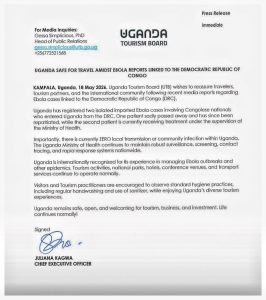
The Uganda Tourism Board (UTB) has issued clear statements reassuring tourists, investors, and the international community that Uganda is safe for travel despite the Ebola reports linked to the DRC. According to UTB, the country stays fully open for tourism, with all national parks, lodges, hotels, and transport services operating normally.
“Uganda remains safe, open, and welcoming for tourism, business, and investment. Life continues normally,” UTB officials emphasize. They highlight that the two cases were isolated imports with no evidence of local spread. Tourism activities, including gorilla trekking in Bwindi, game drives, and cultural experiences, continue without interruption.
This official reassurance aims to counter any unnecessary panic or travel cancellations. Uganda’s tourism sector has proven resilient, and authorities work closely with health partners to maintain high safety standards. For travelers who have already booked or are planning trips, this message from UTB provides strong confidence that their Ugandan adventure can proceed as planned.
Why the Risk Remains Low for Most Tourists in Uganda
Ebola spreads through direct contact with bodily fluids of infected people or contaminated surfaces — not through casual contact, air, or general travel. The cases in Uganda were linked specifically to cross-border travel from the affected DRC region, not widespread community transmission.
Popular tourist areas in western and southwestern Uganda (such as Bwindi, Lake Bunyonyi, and Queen Elizabeth) are geographically distant from the eastern border regions near Ituri Province. Routine health screening at borders and airports, combined with Uganda’s experienced public health teams, adds extra layers of protection.
Travelers who avoid close contact with sick individuals, practice good hygiene, and follow official guidelines face minimal risk. Uganda’s health system has handled similar situations effectively before, and international partners like WHO and Africa CDC support ongoing efforts. This context helps explain why Uganda safe for travel remains the prevailing message for responsible tourists.
Health Precautions and Safety Tips for Your Uganda Trip
Simple, everyday precautions go a long way toward staying safe. Wash hands frequently with soap and water or use hand sanitizer. Avoid close physical contact with anyone showing signs of illness, and do not handle wildlife or bushmeat.
Follow updates from reliable sources such as the Uganda Ministry of Health, UTB, WHO, and your own country’s travel advisory. Many lodges and tour operators now include enhanced health protocols as standard. If you feel unwell during your trip, seek medical attention promptly — Uganda has equipped facilities in major tourist areas.
Travel insurance that covers medical emergencies and trip disruptions remains highly recommended. Most visitors to Uganda report feeling secure thanks to visible screening measures at Entebbe International Airport and proactive government communication.
Understanding the Broader Context and Ongoing Response
Uganda shares a long border with the DRC, making cross-border movement a reality for trade and communities. However, authorities have ramped up screening at key entry points. The response includes contact tracing, isolation protocols, and public awareness campaigns.
The Bundibugyo strain is less common than some other Ebola variants, and while no specific vaccine exists for it yet, supportive care improves outcomes significantly. International experts continue supporting Uganda and the DRC to contain the outbreak at its source.
For tourists, this means the situation is being managed responsibly at national and international levels, allowing visitors to focus on the incredible experiences Uganda offers — from primate encounters to stunning landscapes.
Planning Your Trip with Confidence: What to Do Next
Check the latest advisories from UTB and your embassy before travel. Confirm with your tour operator or hotel about any enhanced protocols. Stay flexible but optimistic — Uganda’s tourism industry is ready to welcome you.
Conclusion
Uganda remains safe for travel amid Ebola reports linked to DRC, with the Uganda Tourism Board (UTB) strongly reassuring tourists that the country is open and welcoming. The isolated imported cases have not led to local transmission, and normal tourism activities continue across the country. By staying informed, following basic hygiene practices, and trusting official guidance, you can enjoy a safe and unforgettable journey to the Pearl of Africa.